Feeds:
Posts
Comments

blackcat.jpeg

San Francisco, Calif.

Black Cat Cafe
710 Montgomery Street

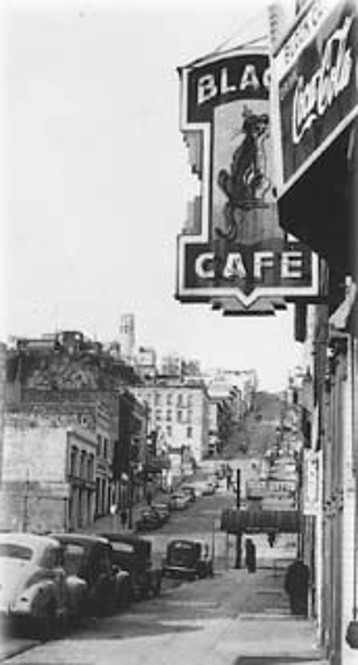
Like many early gay bars, the famous Black Cat didn’t start out that way. Just a few blocks from the center of North Beach, the Black Cat was first distinguished as a bohemian hang-out (it billed itself as Bohemia of the Barbary Coast) and provided the backdrop for part of Jack Kerouac’s On the Road. Following World War II, when gay men and lesbians swarmed San Francisco after service in the Pacific, the Black Cat assumed a “gayer” personality. The poet Allen Ginsburg, who knew it in the ’50s, described it as an enormous bar with a honky-tonk piano that “everyone” went to: “All the gay screaming queens would come, the heterosexual gray flannel suit types, longshoremen. All the poets went there.”

At a time when homophile organizations like the Mattachine Society were largely conciliatory to the police and to city officials, the Black Cat was noteworthy as a site of resistance. Its owner, Sol Stoumen, refused to pay off the police for protection against harassment, and his bar was routinely raided and fined from the 1940s through the early 1960s. During the 1950s, the Black Cat’s flamboyant drag performer, Jose Sarria, sang campy parodies of torch songs, giving them political twists, and finished each set by leading the bar’s patrons in his rendition of “God Save Us Nelly Queens,” even when members of the vice squad were present. His brand of activist theater made him extremely popular among gays, and in 1961 Sarria decided to campaign for city supervisor, knowing that he had no chance of winning. Though he received only a few thousand votes, Sarria said later that his intention had been to show his peers that a gay man had the right to run, whether he won or lost.

The Black Cat was closed in 1963. Said the attorney for the club, “That place is like an institution. This is like closing the cable cars or the Golden Gate Bridge.” There is now an upscale tapas and wine bar called Bocadillos on the site.

fire.jpg

Harlem, N.Y.

267 House
267 West 136th Street

Zora Neale Hurston once wryly dubbed the rooming house that queer writers Wallace Thurman, Bruce Nugent, and Langston Hughes all called home “Niggerati Manor.” The tenement building (also known as “267 House”) was owned by Iolanthe Sydney, a black philanthropist who offered rooms rent-free to artists in order to support their work. Nugent – a painter as well as a writer – reportedly painted brightly colored phalluses on the interior walls.

It was at this address that Thurman, Nugent, Hurston, Hughes, and others started the experimental literary journal Fire!! in the summer of 1926. Each of its seven founders pledged 50 dollars to the effort, but, according to Hughes’s memoirs, only three ever paid up. Since Thurman was the only one with a steady job, his checks paid for the printing bill for the first and only issue.

The journal had a high price tag for the day – one dollar. Hughes later remembered that Fire!! never seemed to make money because Bruce Nugent – who was unemployed at the time – distributed it to booksellers on foot, using the little bit of cash he got from its sale to buy food. (Nugent’s “Smoke, Lilies and Jade,” the first published piece with a homosexual theme by an African-American, was one of the notable pieces included in Fire!!) Ironically, several hundred copies of the journal, which were being stored in the printer’s basement, were burned in an actual fire. It took Thurman four years to pay off the printing bills.

Within two years, the inhabitants of 267 House had all moved elsewhere; but Thurman’s 1932 novel, Infants of the Spring, still provides a glimpse into life at artists’ residence.

“… they walked in silence … Alex turned in his doorway … no need for words … they had always known each other . . .”

–from Richard Bruce Nugent, “Smoke, Lilies and Jade,” 1926

Tennessee in St. Louis

williams.jpg

St. Louis, Mo.

Tennessee Williams home
4633 Westminster Place  (private)

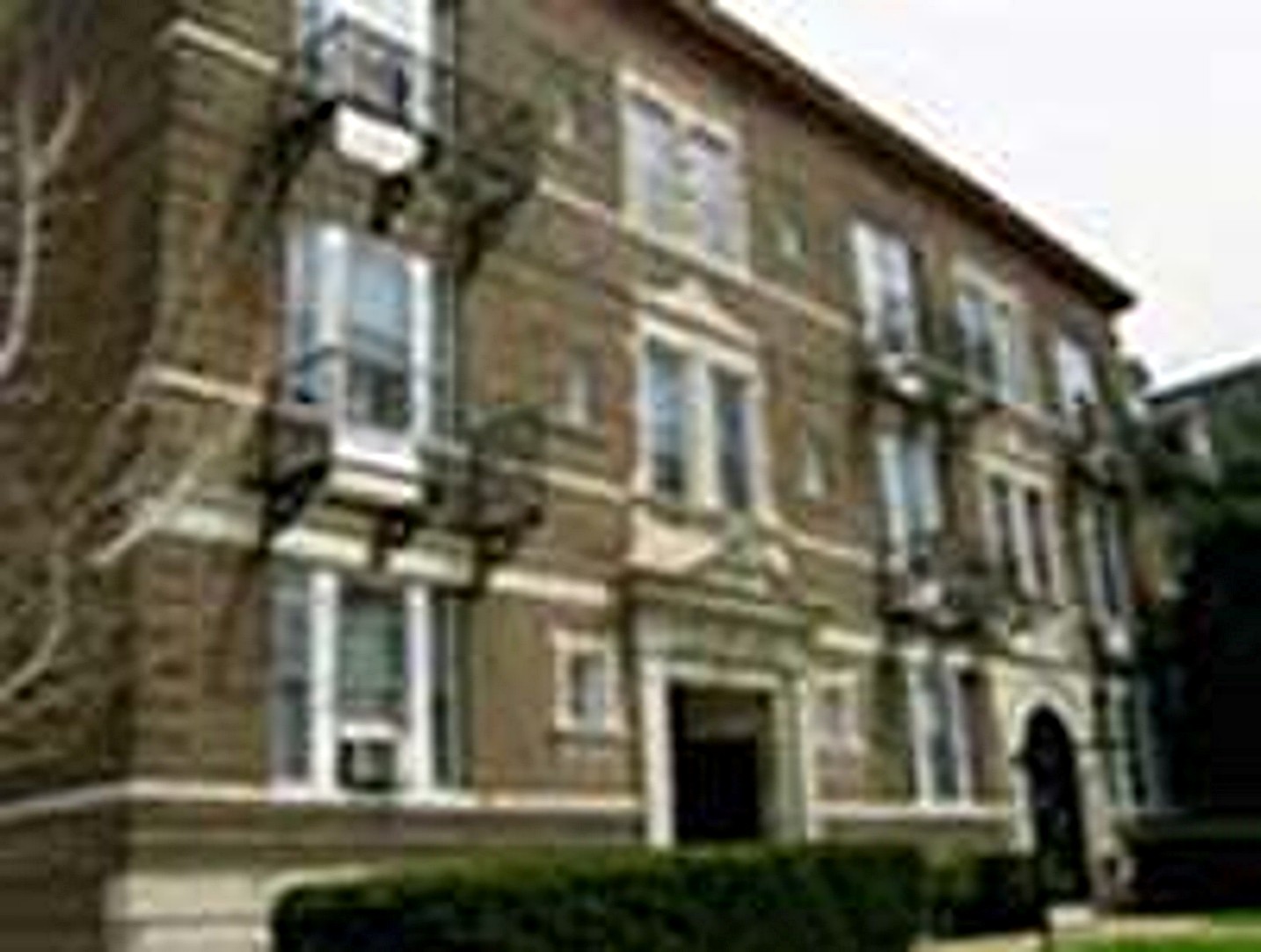
Born in Mississippi, Thomas Lanier “Tennessee” Williams (1911-1983) spent most of his childhood and young manhood in St. Louis, after his father, a shoe salesman, secured employment there. But Williams’ father often drank or gambled away his paycheck, forcing the family to live in a variety of crowded, rented rooms, moving a dozen times in just a few years. In 1921 a small, dark apartment on the third floor of this building was home. A rear window was blocked by a fire escape, allowing only minimal light into the rooms. Williams’ parents were openly hostile to each other, and his mother was increasingly unhappy to be so far removed from the genteel life she had known as a Southern minister’s daughter.

Williams set his first successful play, the autobiographical Glass Menagerie, here on Westminster Place, though the actual events he depicted in that play happened at a later time in another apartment in St. Louis (see below). According to Williams’ stage instructions, the building in which the Wingfields lived was “one of those vast hive-like conglomerations of living-units that flower as warty growths in overcrowded urban centers of lower middle-class population.” This building was later named “The Glass Menagerie Apartments,” in recognition of its place in theatrical history; in 2006, it was gutted, converted into luxury condos, with a starting price of $220,000 each, and renamed “The Tennessee.”

During his last years of high school, Williams and his family moved to five small rooms at 6254 Enright Avenue. Though Williams went off to the university in Columbia in 1929, he returned to the apartment for summers and to live in 1932, when his father could no longer afford to finance his education. It was events at this address that Williams depicted in The Glass Menagerie. His older sister, Rose, who suffered from phobias and hysteria and had twice been hospitalized, was living at home and retreating more and more into herself. The social call that is at the heart of The Glass Menagerie occurred in 1933, when Tennessee’s mother tried unsuccessfully to set Rose up with one of her son’s college friends. Williams’ younger brother, Dakin, later recalled that “the events of The Glass Menagerie are a virtually literal rendering of our family life at 6254 Enright Avenue.”

Jacob’s Pillow

jacobspillow.jpg

Lee, Mass.

Jacob’s Pillow Dance Festival
Ted Shawn Theater
Route 20 (about eight miles east of Lee)

In 1915, modern dance pioneers Ted Shawn and Ruth St. Denis founded the Denishawn School of Dancing and the Denishawn Dance Company in Los Angeles, whose most illustrious student was Martha Graham. In her autobiography, Graham wrote that Shawn was prone to auditioning men for Denishawn by requiring that they send nude photos of themselves. Shawn and St. Denis (who was 14 years older than Shawn) were legally husband and wife for 50 years, though each enjoyed outside affairs. In 1927, they unfortunately fell in love with the same man, Fred Beckman, whom they made their “personal representative.” Having the same taste in men caused an irreparable split in their marriage, and four years later, they began living separately and closed Denishawn.

Shawn (1891-1972) bought a colonial-era farm at this location in the Berkshires after his marriage collapsed. He called the site Jacob’s Pillow after a big, sloping rock near the main house. In 1933, he founded an all-male troupe called the “Men Dancers,” designed to showcase men’s contributions to the field of modern dance. Shawn and his young male dancers lived on the property in a rustic setting without heat or running water. (Shawn had a private shower and toilet, but the other dancers used an outhouse papered with covers from the New Yorker.) At lunch time, Shawn would read aloud to the dancers, who were all nude, on the terrace from books on art, physics, and history.

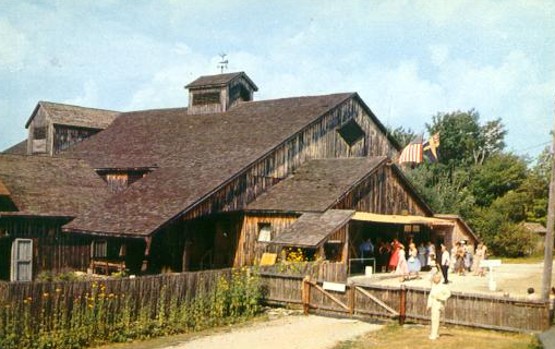
The Men Dancers gave their first performance at Jacob’s Pillow in the summer of 1933. It was held in the barn/studio and attended by 50 people who paid 75 cents each. After that, the company held dance performances yearly, though they were then called “teas” and not a festival. Shawn’s company lasted until 1940, when he disbanded it and gave each member either a cash settlement or a parcel of land at Jacob’s Pillow. The rest of the land he sold the following year to a group who founded the Jacob’s Pillow Dance Festival, which continues today as one of the world’s pre-eminent performance festivals. In 1942, the festival converted the old barn into the Ted Shawn Theater, which retains the rustic charm of the early days of Shawn’s endeavor while being the first theater designed specifically for dance.

marymaclane1911.jpg

Butte, Mont.

Mary MacLane home (private)
419 North Excelsior Avenue

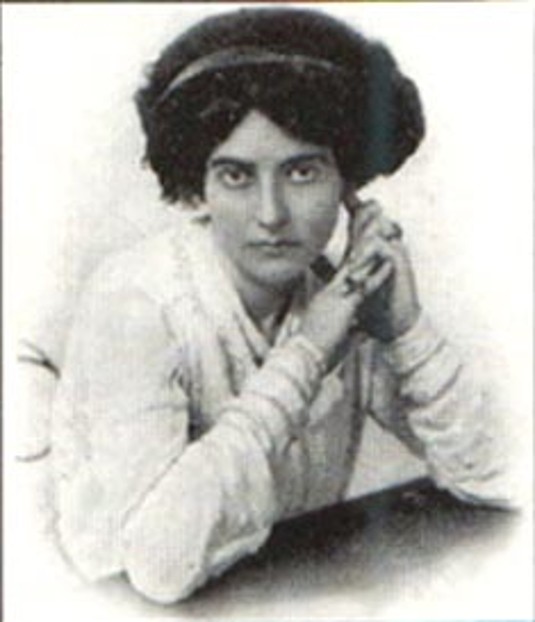
In 1902, the little town of Butte became a household word with the publication of The Story of Mary MacLane. The diary of MacLane (1881-1929), a 20-year-old originally from Canada, revealed her shockingly passionate thoughts and desires. The diary was an instant hit even by today’s standards, selling 80,000 copies in its first month alone.

What made MacLane’s diary such a hot ticket? In it, she wrote of her passion for the “anemone lady,” the only person in the world of any importance to her. The “lady” was in fact MacLane’s English teacher at Butte High school (southwest corner of Idaho and Park Streets), Fannie Corbin, and MacLane proclaimed that she loved Corbin “with a peculiar and vivid intensity, and with all the sincerity and passion that is in me.” MacLane wondered why she could not have been born a man, so that she could love Corbin in the way she wished. “Do you think a man,” wrote MacLane, “is the only creature with whom one may fall in love?”

When the book was published, MacLane was living at this address, a bay-fronted duplex building. (Fannie Corbin lived at 117 North Montana Street.) MacLane left Butte after her meteoric rise to celebrity and spent the rest of her days living a bohemian life in Chicago. Despite her early literary success, she died poor and obscure in a small hotel room. “I don’t know whether I am good and sweet…or evil and untoward,” MacLane wrote in her diary. “And I don’t care.” Talk about lesbian pride!

“…I am someway the Lesbian woman….all women have a touch of the Lesbian: an assertion all good non-analytic creatures refute with horror, but quite true: there is always the poignant intensive personal taste, the flair of inner-sex, in the tenderest friendships of women.”

–Mary MacLane, The Story of Mary MacLane (1902)

Bessie Smith grave

bessiesmithgrave.jpg

Sharon Hill, Pa.

Bessie Smith grave
Mt. Lawn Cemetery
84th Street and Hook Road

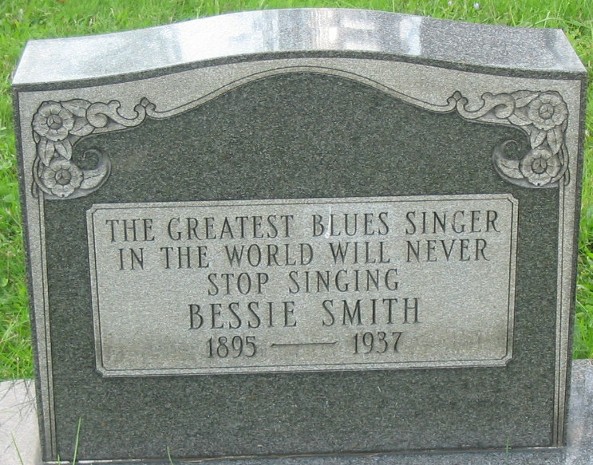
Blues great Bessie Smith (1895-1937) was born into poverty in Tennessee and was discovered singing on street corners at a tender age by Ma Rainey. Though Smith later married a man, she enjoyed numerous sexual relationships with lesbians and bisexual women on the touring circuit, one of whom, Boula Lee, was the wife of her musical director. It has also been suggested that Ma Rainey was her first lover. Smith’s lesbian affairs were a frequent source of tension with her husband, Jack Gee, from whom she eventually separated.

During the 1920s, Smith’s popular “race records” – including “Down-Hearted Blues,” “St. Louis Blues,” “Nobody Knows You When You’re Down and Out,” and “Gimme a Pigfoot and a Bottle of Beer” – won her the title “Empress of the Blues.” Tragically, she was killed in an automobile accident while making a concert tour of the South and was buried in an unmarked grave at this site outside of Philadelphia. In 1970, rock singer Janis Joplin – who cited Smith as a major influence on her own career – helped secure this headstone, along with the daughter of Smith’s former maid. A few months later, Joplin herself died of a drug overdose.

…There’s two things got me puzzled / there’s two things I don’t understand / That’s a Mannish acting woman / and a skipping, twistin’ woman-acting man.

– Bessie Smith, “Foolish Man Blues”

ER at Val-kill

valkilllstudy.jpg


Hyde Park, N.Y.

Eleanor Roosevelt home
“Val-kill”
Route 9G

Intrepid First Lady, women’s rights activist, and humanitarian Eleanor Roosevelt (1884-1962) was most at home here at her private retreat, Val-kill, named after the stream that ran beside it. Orphaned as a child, Eleanor was raised by a grandmother and educated in England at a girls’ academy. At 20, she married her fifth cousin, Franklin Roosevelt, and for the next dozen years was a “proper” wife to an aspiring politician, living mostly in homes owned by her controlling mother-in-law, Sara Delano Roosevelt. But after Eleanor discovered Franklin‘s affair with her social secretary, Lucy Mercer, she offered him a divorce, and they reached the turning point of their marriage. The ambitious Franklin opted for his wife and children – and his political ambitions. Not long after, he contracted polio, which Eleanor nursed him through and which threatened to cut short his career. While he was recovering, Eleanor kept the Roosevelt name alive by making public appearances and speeches and becoming involved in Democratic politics herself. Within the party, she made many good friends, among them the lesbian couple, Nancy Cook and Marion Dickerman.

In 1924, Franklin offered Eleanor, Nancy, and Marion (“the girls,” as he called them) some wooded land on the Roosevelt estate in Hyde Park, on a rocky stream called Val-kill, where they could build a house and enjoy the serenity of the place without being at the large, imposing Roosevelt mansion two miles away. By 1925, a stone cottage in the Dutch colonial style (now called “Stone Cottage”) was built on the site, and Nancy laid out the grounds and gardens. Nancy and Marion began living at the cottage full time that year, with Eleanor visiting them on weekends and during the summers. According to historian Blanche Wiesen Cook, Franklin teasingly dubbed the place “The Honeymoon Cottage,” and Eleanor embroidered the linens “E.M.N.,” the women’s three initials.

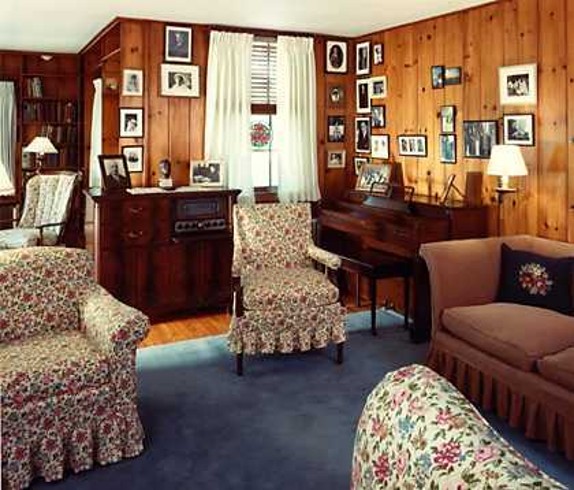
After a year, the trio (with another Democratic Party friend, Caroline O’Day, a former companion of Lillian Wald) had a second cottage constructed on the grounds for Val-kill Industries, an experimental business designed to provide work for local residents. A furniture factory trained artisans to create high-quality early American reproductions, but it folded ten years later under the financial pressures of the Depression. Nancy and Marion continued to occupy the Stone Cottage until 1947, and Eleanor had the factory remodeled into her own home (now “Val-kill Cottage”), the first and only house that belonged to her. After Franklin‘s death in 1945, Val-kill became Eleanor’s permanent residence. Now operated by the National Park Service and open to the public, Val-kill Cottage is a cozy, unpretentious house filled with comfortable furnishings (most made by Val-kill Industries) and decorated with photographs of Eleanor’s friends and family. You can almost see her in the warm pine-paneled rooms, relishing her independence and freedom from the Roosevelt family.

Eleanor has largely been constructed by history as an unattractive, asexual woman whose main function was to further her husband’s career. But Blanche Cook’s biography shows Eleanor in a different light, revealing her activity within the women’s committee of the Democratic Party, her feminist activism, her circle of lesbian friends, and most importantly, her decade-long intimate relationship with reporter Lorena Hickock, nicknamed Hick. At Val-kill, however, you won’t hear even a hint about Eleanor’s lesbianism in the official Park Service interpretation and film, in which Nancy and Marion are painted as “good friends,” and Hick – one of the major relationships of her life – isn’t mentioned at all.

Cole Porter in Peru

porter.jpg

Peru, Ind.

Cole Porter grave site
Mt. Hope Cemetery

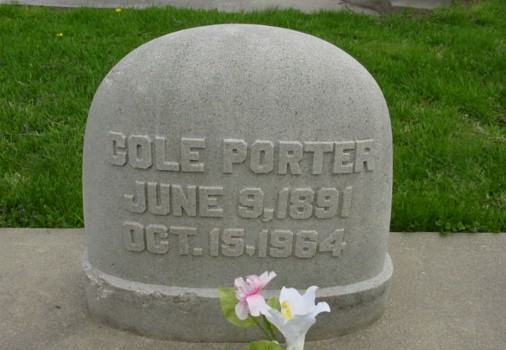
He lived at swell-egant addresses in Manhattan, Beverly Hills, and the Berkshires, but the ultra-sophisticated Cole Porter (1891-1964) chose to be buried in his hometown of Peru, Indiana, with an unassuming marker. Porter was the son of a local druggist, and at age 8 was enrolled at the nearby Marion Conservatory of Music. There the boy first studied violin and piano and performed at recitals dressed like Little Lord Fauntleroy in a velvet suit with lace cuffs. Though one of his biographers claims young Porter was “no prodigy,” he played with a vigor and zest that stole the show. At 10, he composed his first song, “Song of the Birds.”

Lafayette Park

vonsteuben.jpg

Washington, D.C.

Lafayette Park
Boundaries:
Pennsylvania Avenue and H Street, NW; Jackson and Madison Places, NW

Across the street from the White House, this public park has long been a cruising place for gay men. As early as 1892, Dr. Irving Rosse, a professor of nervous diseases at Georgetown University, addressed the topic of “the spread of sexual crime” in the park and elsewhere around the capital. “Only of late,” he wrote, “the chief of police tells me that his men have made, under the very shadow of the White House, eighteen arrests in Lafayette Square…in which the culprits were taken away in flagrante delicto. Both black and white were represented among these moral hermaphrodites, but the majority of them were negros.”

Lafayette Park also features statues of several prominent figures of the American Revolution, whom we now claim as gay. There is a statue of Alexander Hamilton and John Laurens, who were inseparable in life and whose hands in the statue appear to be lightly touching. The two were colonels in the Continental Army and together served as interpreters for Baron von Steuben, the Revolutionary War hero and lover of men. John Laurens was killed during a battle with the British, and Hamilton later went on to become the first U.S. Secretary of the Treasury.

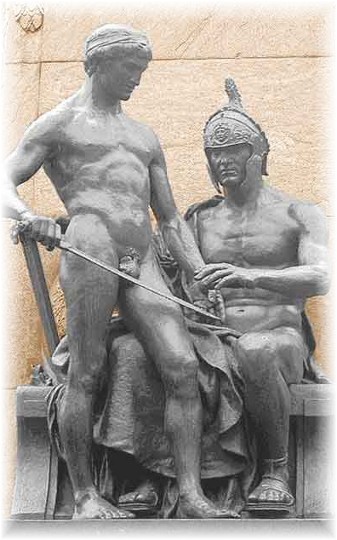
In 1777, Baron Frederick Wilhelm von Steuben, then a captain in the Prussian Army, faced charges of taking “familiarities” with young men, and, to avoid a public scandal, he accepted a commission with the Continental Army, arriving in the American colonies with a 17-year-old French nobleman whom he called his “secretary.” Von Steuben, who was well-acquainted with the rigorous drills of the Prussian Army, is credited with introducing much-needed discipline into the revolutionary forces and thus aiding immeasurably in the eventual American victory over the British. The baron is honored by a monument in Lafayette Park, at the base of which is this statue of two warriors in an appropriately suggestive position (see above).

“…I went into Lafayette Square and near the Von Steuben statue watched two fellows furtively engaged in mutual masturbation under cover of the dimness….Both were handsome, clean-looking chaps, refined and cultured.”

–Jeb Alexander (a pseudonym), August 1920

Carson McCullers Museum

carson-mccullers.jpg

Columbus, Ga.

Smith-McCullers House Museum
1519 Stark Avenue

This modest white frame house was the childhood home of writer Carson McCullers (1917-1967), who was born Lula Carson Smith. (Her actual birthplace was at 423 Thirteenth Street in downtown Columbus.) Carson‘s first fantasy was to be a concert pianist, but a childhood spent reading books and writing and performing skits eventually led to her true vocation. In a 1948 article, “How I Began to Write,” she remembered writing and producing plays in the Stark Avenue house, using the front sitting room as an auditorium and the back sitting room for the stage. The two rooms were separated by walnut pocket doors that functioned as a stage curtain. Carson enlisted her brother and sister as performers, and their proud and supportive mother invited people from the neighborhood to the performances. Carson described their theatrical repertory as “eclectic, running from hashed-over movies to Shakespeare and shows I made up and sometimes wrote down in my nickel Big Chief notebooks.”

Carson was not popular in school – she was withdrawn and cared little about her clothes or appearance – and she was taunted by other girls as being “freakish” or “queer.” She never dated boys until she met Reeves McCullers, a soldier stationed at Fort Benning, in the summer of 1935. Reeves courted Carson at the Starke Avenue house, bringing her mother flowers and candy – and beer and cigarettes for Carson – and they married here two years later. Carson and Reeves had a stormy relationship, rife with drama, that ended finally with Reeves’ suicide. Both were bisexual and at one time were in love with the same man, composer David Diamond.

Carson‘s mother lived in this house until her husband’s death in 1944. Plagued by illness throughout her life, Carson frequently returned to Columbus to recuperate under her mother’s care. Eventually, mother and daughter lived together in Nyack, N.Y., in a house bought with the money from the sale of the Stark Avenue house. The house is now open to the public by appointment (706-327-1911); it also operates as an artists’ retreat, offering residencies to writers and musicians.