Feeds:
Posts
Comments

mapft

Fort Meade, S.D.

Fort Meade
Highway 34/79

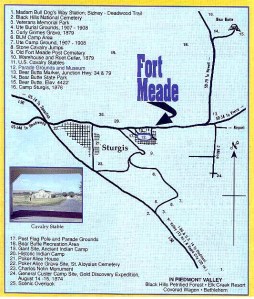
When the Seventh Cavalry under General George Armstrong Custer was stationed here in what was then “the Dakota Territory” in the 1870s, the company laundress, “Mrs. Corporal Noonan,” was a popular midwife, seamstress, cook, and nurse. She had three soldier husbands between the years 1868 and 1878, the last of whom was John Noonan, an orderly. According to historian John Wilke, General Custer’s wife, Elizabeth, also employed Mrs. Noonan privately, praising the woman’s handiwork: “When she brought the linen home, it was fluted and frilled so daintily that I considered her a treasure.”

But Mrs. Noonan also had a well-kept secret. Elizabeth Custer remembered that the laundress “kept a veil pinned about the lower part of her face.” When Mrs. Noonan died in 1878, the women at the post who had the task of preparing her body for burial discovered that she was a biological man. Her husband would have undoubtedly been court-martialed and sent to the penitentiary, but the corporal committed suicide before he could be prosecuted, just a month after his wife’s death.
philly

Philadelphia, Pa.

Annual Reminder marker
6th and Chestnut Streets

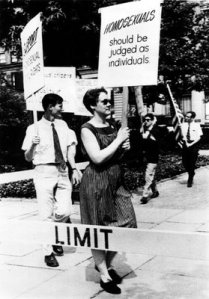
This state historical marker, erected in 2005 by the Pennsylvania Historical and Museum Commission, was the first in the country to recognize and celebrate LGBT history. It commemorates the “Annual Reminder,” the first public demonstration for LGBT rights, which began on July 4, 1965 – four years before the rebellion at the Stonewall Inn in New York. The peaceful, orderly protest – in which the lesbians wore dresses and gay men wore suits and ties – circled in front of Independence Hall, the placards bearing slogans such as “Homosexuals Should Be Judged as Individuals.” The “Annual Reminder” continued at this location through 1969, but after the Stonewall riots moved to New York City.

Behind the protest was Barbara Gittings (1932-2007), who had moved to Philadelphia in the 1950s and became one of the country’s most important LGBT activists. (That’s her in front in the photo above.) She also helped organize picket lines at the White House and the U.S. State Department. Among her many accomplishments, she was instrumental in getting the American Psychiatric Association to drop homosexuality from its list of mental illnesses in 1972.

America the Beautiful Plaque

Colorado Springs, Colo.

“America, the Beautiful” plaque
Pikes Peak

With a height of 14,110 feet, Pikes Peak is a formidable challenge for any climber, but in 1893, a young Wellesley College English professor named Katharine Lee Bates (1859-1929) made it to the top. That summer, Bates had taken a teaching position at Colorado College to supplement her income, even though it meant lonely months apart from her life partner, Katherine Coman. Bates and Coman were part of a community of “Wellesley marriages,” and were a couple for 20 years.

After scaling Pikes Peak and admiring the breathtaking view of “spacious skies” and “purple mountains’ majesty,” Bates was inspired to write the poem “America the Beautiful” in just one day, penciling four verses quickly into her notebook. Bates once recalled that she was “disheartened” with the poem. But when it was published in 1895, it became an instant public hit and was later set to music. With the royalties, Bates built “a dear little house” in Wellesley for herself and Coman. Today, a plaque at the summit of Pikes Peak memorializes Bates’ poem.

The Hamilton Way

hamilton

Washington, D.C.

Edith Hamilton home
2448 Massachusetts Avenue, N.W.

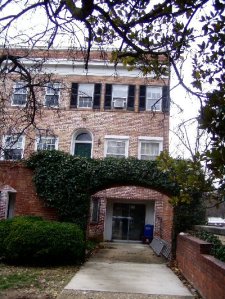
For the last 20 years of her life, classical scholar Edith Hamilton (1867-1963) lived at this address, which is near Rock Creek Park. A Latin and Greek major at Bryn Mawr College, Hamilton became the popular headmistress of Bryn Mawr Preparatory School for Girls, a girls’ academy in Baltimore, when she was just 29, and remained in that position for 26 years. (In 1954, the school named a building after her.)

After retiring, Hamilton embarked on a second successful career as a writer, almost single-handedly popularizing the study of ancient civilizations with such books as The Greek Way (1930), The Roman Way (1932), and Mythology (1942).

From the 1920s until her death, Hamilton’s life partner was Doris Fielding Reid, a stockbroker and former student of Hamilton’s, who eventually became her biographer. The two women cohabited in Maine, on Park Avenue in New York City, and finally in Washington, D.C. Together, they raised Reid’s nephew, Dorian. Astonishingly, Hamilton, the woman who introduced most of us to the ancient Greeks, did not visit Greece herself until she was 90 years old.

stonewallinn

New York, N.Y.

Stonewall Inn
51-53 Christopher Street

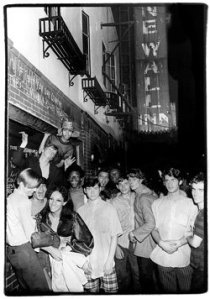
This weekend marks a historic event in lesbian, gay, bisexual, and transgender history: the 40th anniversary of the riots at the Stonewall Inn in New York City, a popular gay bar and hangout in the late 1960s, a place to meet friends and lovers. But at a time when homosexuality was criminalized, police raids of gay bars were de rigueur. On June 28, 1969, when cops raided the Stonewall in the early morning hours and forced the patrons outside, drag queens, young queer people of color, gay men, and a crowd of supporters on the street began pelting the police with beer cans and rocks. The crowd then set the bar on fire, but the police extinguished the flames and “secured” the area within a few hours. A weekend of rioting ensued, during which gay people stood off city cops and claimed their right to live openly – “Homo Nest Raided, Queen Bees Are Stinging Mad,” ran the headline in the New York Post.

The rebellion sparked a new movement that grew by leaps and bounds into the LGBT rights movement of today. The term “Stonewall” is now the international symbol of LGBT resistance and liberation, and the anniversary of the rebellion is celebrated around the world with marches, rallies, and parades. In 1999, the Stonewall Inn was added to the National Register of Historic Places, the only LGBT site on the list. Although the original bar has gone through many transformations since 1969 – in the early 1980s, for example, it was a bagel shop – it is once again a gay bar called the Stonewall Inn.

image_01

The Height of Camp

Cherry Grove (Fire Island), N.Y.

The Belvedere
Bay View Walk

In 1956, set designer and graphic artist John Eberhardt visited Fire Island for the first time and fell in love with the barrier island just a few hours from New York City. He bought a plot of land and with his partner, Joe Fiorentino, built this imposing three-story Rococco guest house on the bay, in the heart of the country’s oldest gay resort. With its gleaming cupolas, Roman statues and columns, mirrors, fountains, and formal wisteria-draped arbors, the antiques-furnished Belvedere sits in sharp contrast to the simple, shingled beach cottages of “the Grove,” rising above them like a sort of Taj Mahal. In the early days, Eberhardt was famous for the elaborate parties he threw at the Belvedere. He and Fiorentino went on to become the Grove’s largest landowners, buying up much of the eastern end of the resort and building numerous gingerbread cottages through the late 1960s. Gay men can still stay at the ultra-campy, clothing-optional Belvedere.

A Grave Matter

180px-Charlotte_and_Susan_Cushman_-_Romeo_Juliet_1846

Cambridge, Mass.

Mt. Auburn Cemetery
580 Mount Auburn Street

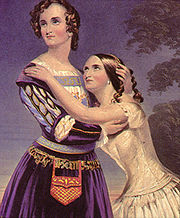
A guide map is available at the entrance to this historic cemetery, which will steer you to the many famous historical figures buried here. Among them, of course, are lesbians and women-identified women. You can visit the grave of actress Charlotte Cushman (who made a dashing cross-dressed Romeo in 1846, opposite her sister Susan’s Juliet – see above) and that of one of her many intimates, sculptor Harriet Hosmer. Also in the park is a statue, by lesbian sculptor Edmonia Lewis (one of Cushman’s and Hosmer’s circle), of Hygeia, the Greek goddess of health, which was commissioned in 1875 for the grave of pioneering physician Harriot K. Hunt. Poet Amy Lowell also rests at Mt. Auburn.

Places-41a

Santa Monica, Calif.

Greta Garbo/Mercedes de Acosta meeting place
165 Mabery Road

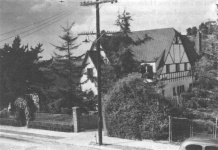
In 1931, the young Swedish film sensation Greta Garbo met and fell for Mercedes de Acosta, a dramatic-looking writer with pale skin and raven black hair who habitually sported white flannel trousers, silk shirts, berets, and boyish haircuts. Both women had been invited to tea at this address on Mabery Road, which was the home of their mutual friend Salka Viertel. A playwright and stage manager for Eva LeGallienne (who was also her lover), de Acosta had come to Hollywood from New York two years earlier to write a treatment for actress Pola Negri.

After de Acosta and Garbo met, the proverbial sparks flew, and they spent six weeks sequestered at Silver Lake, swimming naked and walking in the mountains. There they “honeymooned” on an island in the middle of the lake, in a small log cabin that belonged to actor Wallace Beery.

Garbo later credited de Acosta with giving her the foundation on which she based the wonderfully androgynous character Queen Christina. While lovers with de Acosta, Garbo began her habit of wearing trousers in public. The two women would stroll boldly along Hollywood Boulevard in similar attire, flaunting their relationship. The same year they met, the lovers moved to adjoining homes on North Rockingham Road in Brentwood. Over the years, their relationship ran hot and cold, each taking numerous lovers. In 1960 came the final split, though, when Garbo – the queen of privacy – became upset by the publication of de Acosta’s tell-all memoir, Here Lies the Heart.

She used to climb ahead of me, and with her hair blown back, her face turned to the wind and sun, she would leap from rock to rock on her bare Hellenic feet…looking like some radiant, elemental, glorious god and goddess melted into one.

–Mercedes de Acosta, writing about her 1931 “honeymoon” with Garbo

ingefrontyard

Independence, Kansas

William Inge Center for the Arts
Independence Community College
1057 W. College Avenue

Included in this center’s collections are books, tapes, and records from the private cache of playwright William Inge (1913-1973), who attended college here and gave his original manuscripts to the school in 1969. Inge is best known for four successful Broadway plays that were subsequently made into films – Come Back, Little Sheba (1950), Picnic (1953 – won the Pulitzer Prize), Bus Stop (1955), and The Dark at the Top of the Stairs (1957). Also a screenwriter, Inge won an Academy Award in 1961 for the original script of Splendor in the Grass.

Inge was born and raised in Kansas, and all of his plays took that state as their setting. His boyhood home at 514 N. 4th Street is still standing (see above), and was the setting for The Dark at the Top of the Stairs. The home is owned by the William Inge Festival Foundation, and each year, playwrights-in-residence are selected to come to Independence to live in the house and write for nine weeks at a time.

Inge’s work often focused on the repressed sexuality and stultifying social norms that he must have experienced in his own life. A closeted gay man and an abuser of alcohol, Inge included a few characters who were gays stereotypes in his later, lesser-known plays, written in the 1960s after his success had faded. His one act, “The Boys in the Basement,” dealt with a man’s discovery of his homosexuality and was his only play to address the topic directly. Sadly, Inge committed suicide at his home in Hollywood in 1973. He is buried in Independence.

150px-LucyDiggsSlowewindow

Washington, D.C.

Lucy Diggs Slowe window
Howard University chapel
Sixth Street & 
Howard Place, N.W.

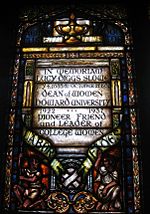
Lucy Diggs Slowe (1883-1937) was the first dean of women at Howard University, a position she held from 1922 until her death. A window in the university chapel (see above) honors her memory. As dean, Slowe worked for empowerment of women, urging female students into the social sciences and other (at that time) nontraditional fields. Concerned for the safety of young women in the “big city,” Slowe expanded the university’s dorm facilities so women could live on campus. Outspoken and headstrong, Slowe often locked horns with the university president over the welfare of the female students.

Slowe shared a home at 1256 Kearney Street, N.E., with her life partner, writer and teacher Mary Powell Burrill, who had earlier been involved with Angelina Weld Grimke. Their residence was an informal gathering place for young Howard women, many of whom idolized their intrepid dean. In a bid to curb her power, Howard’s president once suggested that Slowe herself live in a dorm – a seemingly homophobic attempt to break up the household that had become a source of strength for her.