Feeds:
Posts
Comments

“I Won’t Grow Up”

weatherford-mama-s-wish

Weatherford, Texas

Mary Martin birthplace
414 West Lee Avenue

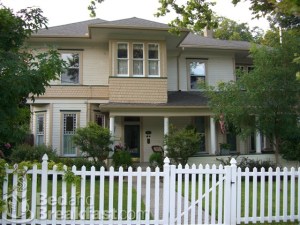
Broadway legend Mary Martin (1913-1990) was born at this address – “a big, rambling house,” as she called it; it’s now a B&B – to a father who was a lawyer and a mother who taught violin. Martin attended elementary school right up the hill from the house. The family later moved to 314 West Oak Street. When Martin was an 18-year-old wife and mother, starving for meaningful work, her older sister encouraged her to open a dance school, and her supportive parents built her a studio at 311 West Oak. There she ran the popular “Mary Hagman’s School of Dance” for three years, serving several hundred students during that time.

While growing up in Weatherford, Martin was a tomboy who preferred “boxing gloves, punching bags, [and] bicycles” to the dolls her mother kept buying for her. An avid reader, she claimed to have read the lesbian classic The Well of Loneliness at age 11. (Not possible, since it wasn’t published in this country until 1928. She also claimed that she didn’t have “the remotest idea what [it was] all about.”)

Married twice, the first time at age 16, Martin left her first husband and young son (actor Larry Hagman) to pursue a career in Hollywood and on the stage. Her second husband, Richard Halliday, liked to shop for antiques with his mother and decorate their home and Martin’s various dressing rooms – you figure it out. Martin enjoyed a lifelong companionship with actress Janet Gaynor, whom she called her “closest, most special friend” and who was in a lavender marriage with costume designer Adrian. Martin’s intimate circle included other queer theater figures, such as Katharine Cornell and Alfred Lunt and Lynne Fontanne.

One of the greatest Broadway musical stars of all time, Martin created the roles of Maria Von Trapp and Nellie Forbush on the stage, but is probably best remembered for her portrayal of the boy who refused to grow up, Peter Pan. In the 1950s and ’60s, she flew into our living rooms in a televised taping of the stage play, singing such classics as “I Won’t Grow Up” and quickly becoming a lesbian icon. She epitomized the popular lesbian aesthetic of resistance to gender norms. In her honor, a statue of Peter Pan sits in front of the Weatherford Public Library. Martin is buried in the East Greenwood Cemetery in town.
Bewitched

MA-00105-C

Salem, Mass.

The entire town of Salem is included here, because its name is indelibly linked with witchcraft. Salem’s persecution and execution of innocent citizens in the late 1690s – most of whom were, in one way or another, “misfits,” and several of whom were unmarried women – is notorious. The word “witch hunt” is now synonymous with any institutionalized scapegoating of individuals or groups, such as of Communists and homosexuals during the McCarthy era.

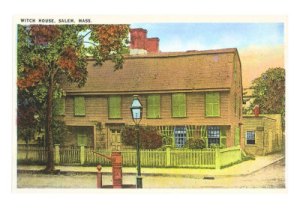
Today, Salem capitalizes on its gruesome past with several campy museums, among them the Salem Witch Museum, the Witch Dungeon (which features a re-enactment of a witch trial), the Salem Wax Museum, the Witch History Museum, and the Witch House (shown in an old postcard above – it was a judge’s home, where witch “examinations” took place). Salem is also home to the famous “House of the Seven Gables,” built in 1668, which is the oldest wooden structure in New England, and the inspiration for Hawthorne’s novel.

Bachelor Pad

Wheatland

Lancaster, Pa.

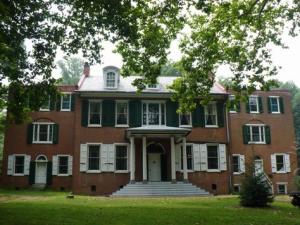
James Buchanan home
Wheatland
1120 Marietta Avenue

James Buchanan (1791-1868), the 15th president of the United States, was also this country’s only confirmed bachelor chief executive. His sexual orientation has frequently been questioned, primarily because of his intimate friendship with William Rufus King, whom he met in 1834 when both were U.S. senators and with whom he shared a flat in Washington. According to historian Jonathan Ned Katz, their relationship was the source of many biting comments in the nation’s capital. King was perhaps more “queen” than “king,” and was referred to by Washington insiders as “Miss Nancy,” “she,” and “Aunt Fancy.”

Buchanan bought this estate in 1848, when he was James Polk’s secretary of state. He had greater political ambitions, and Wheatland, a 17-room federal-style mansion, seemed to him more “presidential” than his Washington digs. Running for president in 1852, Buchanan lost the Democratic nomination to Franklin Pierce, and party bosses selected Senator King as the vice-presidential candidate in a bid for Buchanan’s support (and the votes he could deliver). Pierce and King won, but King died of tuberculosis after only a few weeks in office.

Buchanan became his party’s compromise candidate in the 1856 presidential election, and Wheatland served as his campaign headquarters. Unlike today, when candidates traverse the country in search of votes, Buchanan stayed at Wheatland, receiving visitors who could help his bid for election. This proved a good P.R. move, since newspapers across the country carried accounts of Buchanan’s beautiful estate and of the many dignitaries who passed through Wheatland.

Buchanan served only one uneventful term as chief executive. After his retirement, he returned to Wheatland, which is today run by the National Park Service. Buchanan is buried nearby at the Woodward Hill Cemetery.


I am now solitary and alone, having no companion in the house with me. I have gone a- wooing to several gentlemen, but have not succeeded with any one of them. I feel that it is not good for man to be alone; and should not be astonished to find myself married to some old maid who can nurse me when I am sick, provide good dinners for me when I am well, and not expect from me any very ardent or romantic affection.”

–James Buchanan, 1844,
when William Rufus King was on a trip to France

Ladies’ Man

picture-uh=a8c8206c746bbccbd9595bdcb080e5-ps=7c833bc61c9b4ae332eb3831d0c7c3

Los Angeles, Calif.

Cary Grant/Randolph Scott home
2177 West Live Oak Drive (private)

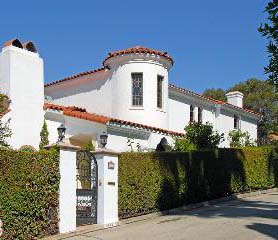
Though he married women five times, movie star Cary Grant (1904-1986) enjoyed several gay relationships during his early career in New York and Hollywood. His most famous same-sex romance was with fellow actor Randolph Scott (1898-1987), the rugged star of numerous westerns. Grant and Scott met at Paramount Studios in 1932 and were immediately attracted to each other. Soon after, they moved in together, sharing this house near Griffith Park. The move was disguised by studio P.R. agents as a way for two young actors to “cut costs” and share expenses, even though both made ample salaries and could afford their own homes. Even after Grant’s marriage to Virginia Cherrill, the two men continued co-habiting; Cherrill simply moved into the house with them.

Between liaisons with other men and women, Grant and Scott’s relationship persisted, well known to their colleagues in the industry. (If for some reason you’ve never seen it, don’t miss the two as co-stars in the outrageous My Favorite Wife.) In the late 1930s, Grant and Scott occupied a Santa Monica beach house at 1019 Ocean Front (now 1039). In fan magazines, they were  photographed together in domestic bliss, wearing aprons and cavorting poolside or on the patio. According to Grant’s biographer, they believed their public flamboyance would raise them above suspicion of homosexuality. They must have been right, because Grant enjoyed a screen career as a suave ladies’ man for the next three decades.

Queer Chicago

photo8

Chicago, Ill.

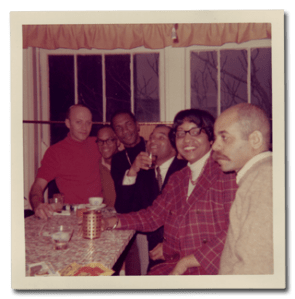
In my ramblings through cyberspace, I discovered a new queer local history film that looks exciting: Quearborn and Perversion: An Early History of Lesbian and Gay Chicago. Filmmaker Ron Pajak says his mission is “to uncover stories from men and women, black and white, about the lesbian and gay life of Chicagoans before any freedoms existed.” The film spans the years 1934-1974, and has a wealth of amazing historic photos and video footage, as well as interviews with lesbian and gay Chicagoans. You can watch a preview at the website – don’t miss it.

Come to the Cabaret

allah_performers-s

Seattle, Wash.

The Garden of Allah
1213 First Avenue

Seattle’s first gay-owned bar (also one of the first in the country) was located at this downtown address from 1946 to 1956, in the basement of the Victorian-era Arlington hotel. The hotel sat midway between a gambling and red-light district at one end of First Avenue and an upper-class commercial district at the other.

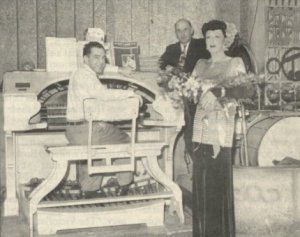
The Garden of Allah, as the club was called (it had also been the name of a famous apartment complex in West Hollywood owned by Alla Nazimova), operated as a gay cabaret. From First Avenue, a guest descended a white marble staircase and slipped a $1 bill through a peephole for admittance. Inside, blue and pink lightbulbs provided a sensual ambience, and palm trees and stars stenciled on the walls gave the place a “Casbah” feeling. Tables were tightly packed in front of a stage, the centerpiece of which was a 1924 Wurlitzer pipe organ that accompanied every cabaret show (see photo, ca. 1948). The owners paid off the police to avoid raids, and an ever-present off-duty cop was stationed in the club to make sure that same-sex couples didn’t touch.

Drag entertainers were the highlight of the cabaret’s shows, and gay men, lesbians, and straight people alike made up the boisterous audiences. On opening night in 1946, the featured attraction was the Jewel Box Revue, the famous drag show that started touring clubs in 1939. Over the years, some of the Garden’s drag entertainers also performed striptease.

With a decline in interest in drag during the repressive 1950s, the Garden of Allah eventually closed. For a while, the space was used to store nuclear-attack rations. Later, it became a biracial rock club called House of Entertainment, where Jimi Hendrix once played. The hotel was razed in 1974. For more about the club, see Don Paulson and Roger Simpson’s excellent book, An Evening at the Garden of Allah: A Gay Cabaret in Seattle.

LGBT Icons

In case you haven’t seen it yet, the Equality Forum in Philadelphia has put together this video for LGBT History Month (October), which briefly profiles their picks for LGBT icons.

Dayton Was a Woman

Natalie_Barney_and_Romaine_Brooks

Dayton, Ohio

Natalie Barney marker
Cooper Park
St. Clair at Third Street

On October 25, 2009, an Ohio Historical Marker honoring lesbian poet Natalie Barney will be dedicated at this site in Dayton, Barney’s city of birth. It will be the first such marker in the state to acknowledge a historical figure’s sexual orientation. The Gay Ohio History Initiative and its partners raised $2,300 to pay for the bronze marker.

Born to a successful businessman and a free-spirited artist, Natalie Barney (1876-1972) was one of the most famous – and wealthiest – lesbians of her day. Both of her parents inherited sizable family estates, and young Natalie was raised in the lap of luxury. When she was 2 years old, the Barneys relocated to Cincinnati, and when she was in her teens, they took up residence in the nation’s capital, where they moved in the top social and diplomatic circles.

Throughout her youth, Natalie often traveled with her mother, the painter Alice Pike Barney, to Europe for extended stays. It was in Paris that Natalie finally decided to settle at age 24, the heir of a substantial fortune of her own.

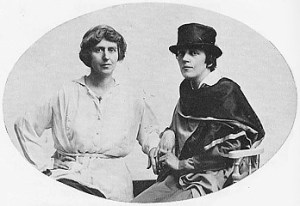
Barney published numerous poetry collections and plays in French during her lifetime, noted for their openly lesbian content (she had known she was a lesbian since the age of 12), and also penned several memoirs. Her tempestuous affair with poet Renee Vivien and her long-term relationship with painter Romaine Brooks (shown together in the photo above, ca. 1915) have frequently been written about. But it was as the host of a celebrated Friday afternoon literary salon at 20 rue Jacob that she is perhaps best remembered. Barney’s salon was the center of the French avant-garde and of queer expatriate Paris for 50 years, frequented by such literati as Marcel Proust, Colette, Gertrude Stein, Djuna Barnes, Oscar Wilde, Radclyffe Hall, Janet Flanner, and Andre Gide. Djuna Barnes’ roman a clef, Ladies Almanack (1928), spoofed both the salon and its best-known members.

Lesbian filmmaker Greta Schiller made a documentary in 1995 called Paris Was a Woman, about the thriving lesbian cultural scene in Paris in the ’20s. In it, there is a walkthrough, using period footage, of Barney’s famous salon.

QUATRE_FINAL_E-BOOK-18

Minneapolis, Minn.

Quatrefoil Library
1619 Dayton Avenue, Suite 105

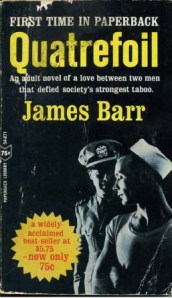
Quatrefoil Library, the country’s second oldest lending library of materials related to sexual minorities (the Gerber/Hart Library in Chicago was the first), takes its name from the 1951 novel by James Barr, Quatrefoil, which was one of the first to depict gay characters positively. In the mid-1970s, David Irwin and his partner, Dick Hewetson, each began collecting gay-themed books. When they moved in together in 1977, they combined their collections and kept them in the linen closet of their condo, which was soon overflowing with volumes. The two men incorporated their holdings as Quatrefoil Library in 1983, and the first public home of the library opened several years later at 1021 West Broadway. Though their relationship ended not long after the library was incorporated, their important collection of gay literature was able to live on.

The library grew exponentially during its early years and in 1987 found larger, much-needed space at this address (“a cozy set of rooms,” according to one reporter), a former school renovated to house the offices of various organizations. Today, still located at this address, Quatrefoil collects not only books and magazines, but memorabilia, audio and video, games, newspaper clippings, and historical erotica related to sexual minorities. At a celebration in 1991, Quatrefoil‘s author, James Barr, was the library’s guest of honor.

In 2008, the library published its own history; it is available online here.

2346985845_21316589f3

Moylan, Pa.

Anna Howard Shaw home
240 Ridley Creek Road (private)

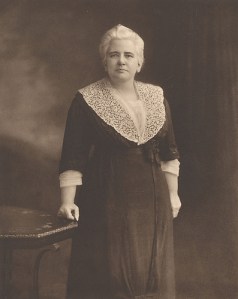
This picturesque stone house with blue trim, now a private residence, was built in 1908 by suffragist Anna Howard Shaw (1847-1919), who lived here with her intimate companion, Lucy Anthony, niece of Susan B. The house was “a realization of a desire…No one could ask for a more ideal site for a cottage,” Shaw wrote in her autobiography, The Story of a Pioneer, in which she noted a nearby stream and forest, and the hilltop view. Shaw was a brilliant orator who traveled extensively on behalf of the suffrage movement. “From every country I have visited I have brought back a tiny tree,” she noted, and the pine grove she started planting at her home is now full grown.

While she lived here, Shaw, a minister by profession, was president of the National American Woman’s Suffrage Association. Her early activism focused on temperance, but she was lured to the suffrage movement by Susan B. herself. It is estimated that Shaw gave about 10,000 speeches on suffrage during her career, mesmerizing her audiences with her powerful voice, dramatic delivery, and sharp with. She died here in Moylan, a year before the 19th Amendment passed, giving women the right to vote. The New York Times reported that “her secretary, Miss Lucy E. Anthony, a niece of Susan B. Anthony, who has been with Dr. Shaw for thirty years, … [was] at her bedside when she died.”

Q: Why does the Scripture say there shall be no marriages in heaven?
A: Ah, my dear friends [drawing a long sigh], someone has answered that by saying, because there will be no men there.

–Anna Howard Shaw, during a Q&A after one of her speeches