Feeds:
Posts
Comments

Homage to Joan

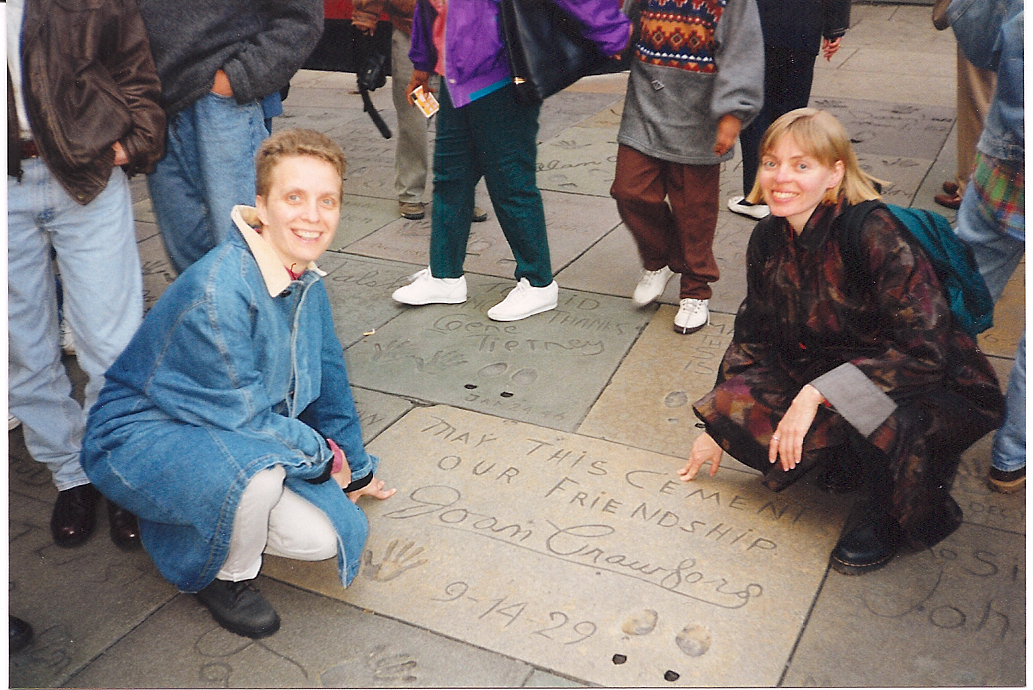
Me (left) and Katie

In looking through some old photos, I found one of me and my partner Katie in 1992, when we were newly a couple and took our first trip together, to visit friends in L.A. Apparently, I was crazy for queer sites even then, as my friend snapped a shot of us paying homage to the cement hand- and footprints of Joan Crawford in the famous forecourt of Grauman’s Chinese Theatre. Click here for a guide to other stars’ signatures at Grauman’s.

I love playing bitches. There’s a lot of bitch in every woman – a lot in every man.”

-Joan Crawford

Rubbed the Right Way

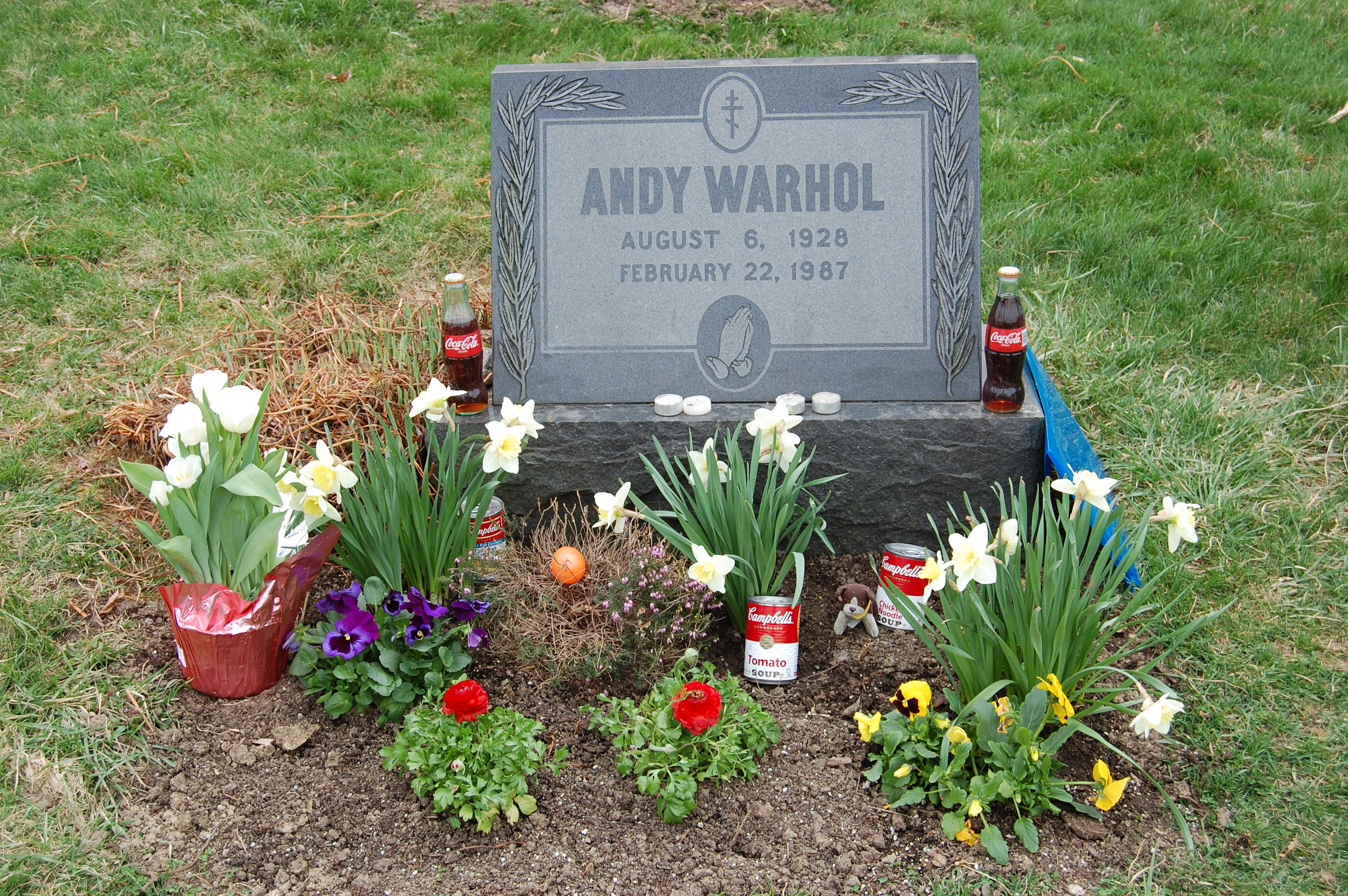
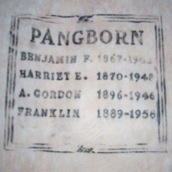
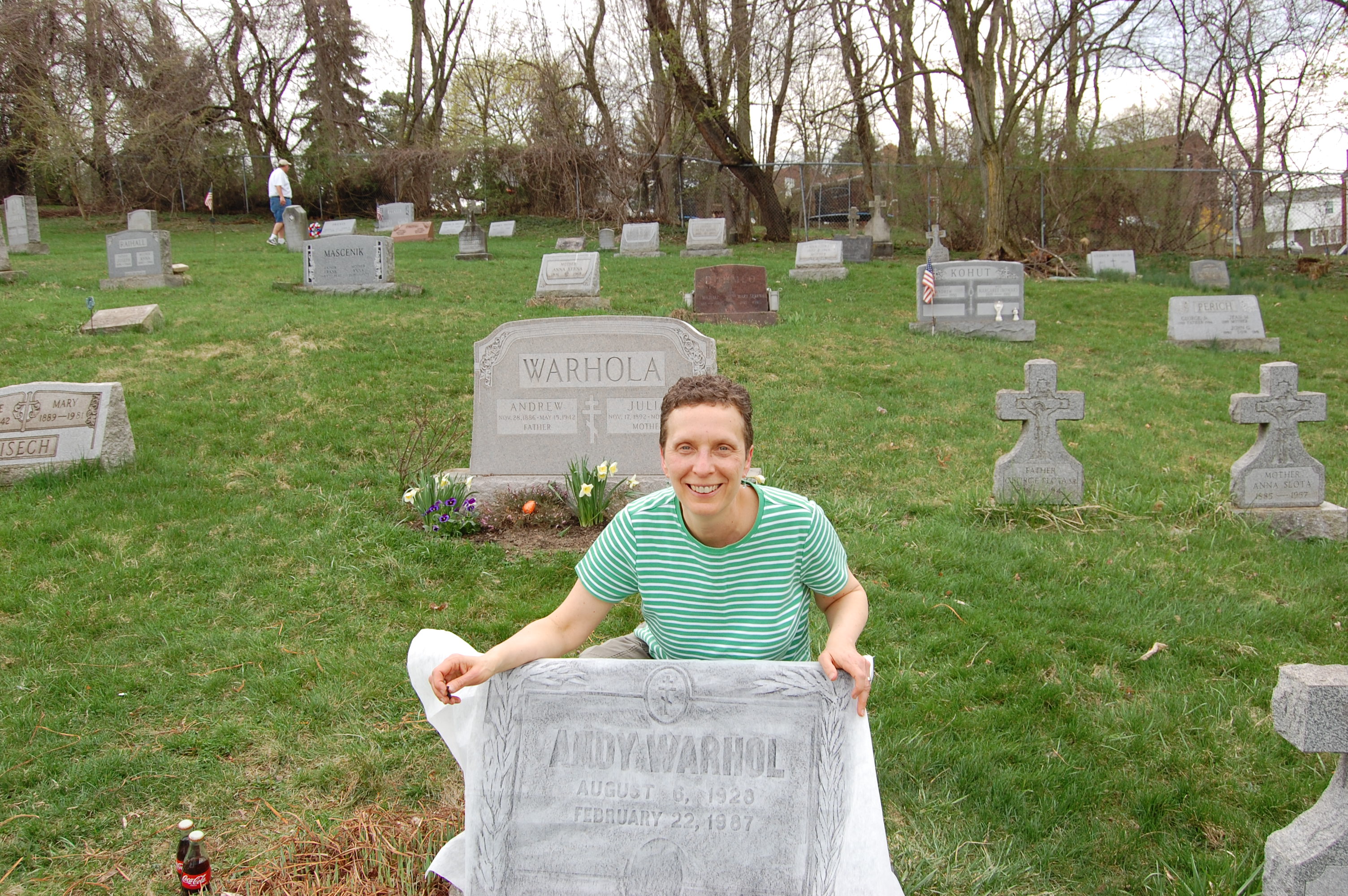
Thanks to Steven Reigns of The Gay Rub, I had enough materials to go out into the field yesterday and do a rubbing of artist Andy Warhol’s tombstone. If you missed my post about Steven’s project, click here. Directly behind me in the photo is the grave of Andy’s parents.

And here’s what the decorations and mementos on Andy’s grave look like right now. In addition to the soup cans and Coke bottles, someone left an envelope of their writing at the side of the stone, and there’s a plastic egg for Easter, too. For more about Andy, see my earlier post.

Beach and Company

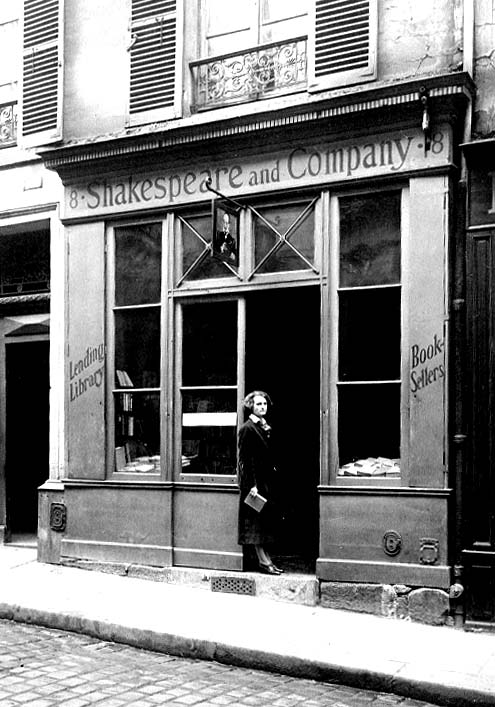
Sylvia Beach at her bookshop

Princeton, N.J.

Sylvia Beach grave

Princeton Cemetery

Greenview Avenue and Humbert Street

Born in Baltimore and raised in a Presbyterian parsonage in Bridgeton, N.J., Nancy Woodridge Beach changed her name to Sylvia when she was a teenager. While her minister father was associate pastor of the American Church in Paris from 1902-1905, young Sylvia determined that she would someday live in the French capital. During World War I, she and her sister took off for Europe to volunteer for the Red Cross, and Sylvia lived the rest of her life abroad.

Beach (1887-1962) is one of the best known of the American expatriates of the early 20th century, and the founder of the bookstore Shakespeare and Company. The store was the first English-language bookshop on Paris’ Left Bank, serving as a literary center, lending library, and publishing company for the years between the two wars, with such frequent visitors as Gertrude Stein, Natalie Barney, Andre Gide, Ezra Pound, and Bryher. Beach is remembered in the literary canon as the publisher of numerous editions of James Joyce’s Ulysses, which American presses considered too radical a text to publish. She immortalized her store and the expatriate literary circle in a memoir called Shakespeare and Company (1959).

Beach was a confirmed liberal and a woman with a strong anti-Fascist reputation. The Nazis closed her shop in 1941, and interned her for six months as an “enemy alien.” After the war, she did not reopen the shop, but continued to lend books from her apartment.

The love of Beach’s life was Adrienne Monnier, a Frenchwoman who owned a bookshop called La Maison des Amis des Livres (literally, the House of Friends of Books), directly across the street from Shakespeare and Company. Beach and Monnier lived together from 1920 to 1936, when Monnier’s affair with another women caused them to separate. Still (in true lesbian fashion), they remained friends until Monnier’s death in 1955, having dinner together most evenings. Though Beach lived most of her life abroad, she is buried in this Princeton cemetery with her family.

She Saw Hitler

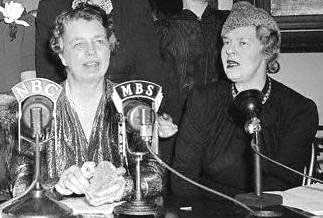
Eleanor Roosevelt with Dorothy Thompson in 1942

New York, N.Y.

Dorothy Thompson house

237 East 48th Street

Dorothy Thompson (1894-1961), one of the most intrepid foreign correspondents of her day and the author of I Saw Hitler, was once married to writer Sinclair Lewis, but the great love of her life was Christa Winsloe, author of the novel upon which the classic lesbian film Mädchen in Uniform was based. After the break with both of them, Thompson lived alone in this three-story brownstone in the Turtle Bay neighborhood of Manhattan from 1941 to 1957. She spent more than $20,000 for renovations to make it, as she wrote, “the most perfect small house I have ever seen.”

Thompson’s “small” home included a library with more than 3,000 books, five fireplaces, and a third-floor study for writing. In the drawing room, a wine-colored satin sofa could hold, she bragged, five of “the most distinguished bottoms in New York.” When the renovations were complete, Thompson invited a reporter from Look magazine to inspect the final product, and he remarked admiringly on the many telephones, intercoms, and labor-saving devices throughout the house.

In the front door were eight painted glass panels showing Thompson in medieval attire performing various tasks – writing, lecturing, greeting guests. There was also the house’s motto: “Gallus in sterquilinio suo plurimum potest.” (“The rooster on his own dunghill is very much in charge.”) New York’s Historic Landmark Preservation Center placed a medallion on Thompson’s brownstone in 1995.

Lowell, Mass.

Jack Kerouac Commemorative

Eastern Canal Park

Bridge Street

Following on the heels of my most recent post on City Lights Books… Writer Jack Kerouac (1922-1969) was born in this old mill town to French-Canadian parents, and did not learn to speak English until he went to school. Kerouac left Lowell at 17 for New York City, where he briefly attended Columbia University. In 1944, his girlfriend, Edie Parker (later his first wife), introduced him to Allen Ginsberg and William S. Burroughs, and the triumvirate formed the core of the Beat poets.

Kerouac’s most famous novel, On the Road (1957), was written in three weeks on a scroll that he made out of sheets of paper taped together so that he could type without interruption. A tour of the scroll began making its way to universities and museums around the country in 2004.

Kerouac married three times and had one daughter. (Also a writer, Jan Kerouac committed suicide in 1996.) He also had a variety of male lovers, among them his fellow Beats and writer Gore Vidal. An alcoholic, he died young of complications of the disease.

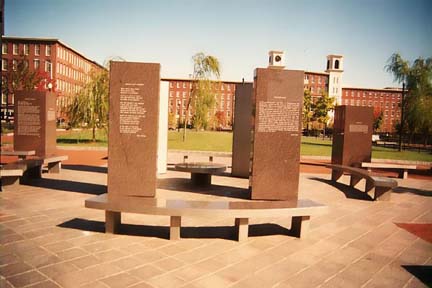
Lowell erected this sculpture to its native son in 1988, after several years of dispute about whether the town should memorialize an alcoholic. Citing his literary contributions, Kerouac supporters won out, and Ginsberg read some of his early poems at the dedication. “Kerouac is the heart and spirit of what has brought us together!” Ginsberg proclaimed. The granite panels, created by artist Ben Woitena, are inscribed with excerpts from Kerouac’s work, including the opening paragraph of On the Road.

There are other tributes to Kerouac in different parts of the country. Most notably, the bungalow in Orlando, Fla., where Kerouac was living when On the Road was published and where he wrote much of The Dharma Burns (1958) now houses the Jack Kerouac Project, a residency program for writers.

For the Kerouac Commemorative I sought images which sculpturally communicate and honor his philosophy of life and the genius of his literary talent. Conceptually, the park is structured in the form of a mandala; that is, a diagram of symbolic geometric arrangements designed to make clear the relationship between the quoted texts and the visual images which inspire them.”

-Ben Woitena

A Literary Giant

San Francisco, Calif.

City Lights Books

261 Columbia Avenue

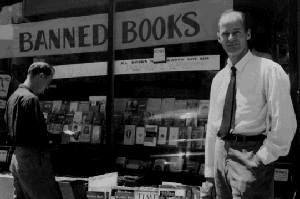
The legendary City Lights Books in San Francisco, which was founded in 1953 and remains a literary landmark, has just been named bookseller of the year by trade magazine Publishers Weekly. City Lights was an informal center for the Beat poets in the 1950s.

City Lights’ publishing arm was founded in 1955 and has a distinguished history of publishing cutting-edge and queer work. In the most famous example, the co-founder of the bookstore/publisher, poet Lawrence Ferlinghetti, was present at Allen Ginsberg’s first reading of “Howl” in 1956, and asked if he could publish the poem. The following year, after copies of Howl were seized by customs officials, Ferlinghetti was arrested for publishing and selling the book, which was deemed “obscene.” In his subsequent trial, the ACLU defended Ferlinghetti, and the judge ruled that Ginsberg’s work was not obscene. “‘Howl’ knocked the sides out of things,” Ferlinghetti later said. Kudos to City Lights for its long history of championing queer voices.

I just found out about an exciting queer history project initiated by Steven Reigns, an L.A.-based poet and educator. It’s called “The Gay Rub” and it’s devoted to collecting rubbings from LGBT tombstones, markers, signs, plaques, monuments, and so forth. Steven is looking for collaborators from around the country and the world, and has a wish list on the website of rubbings he’d like to collect. But he’s also open to suggestions of sites and markers that people may like to contribute. He will even mail you the materials if you can’t afford to buy them yourself. Check it out… and then start rubbing!

“The Larky Life”

S.I. Historical Society

Staten Island, N.Y.

Alice Austen home

“Clear Comfort”

2 Hylan Boulevard

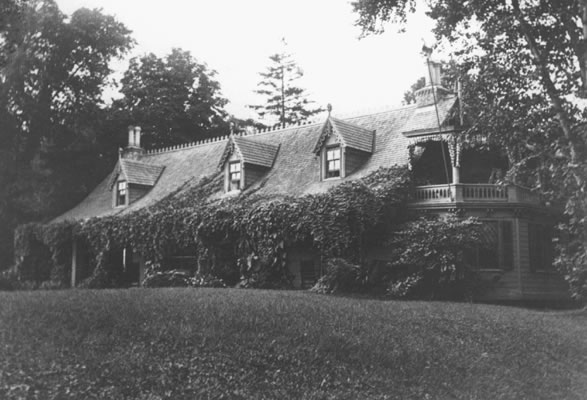
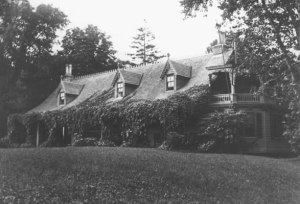
When photographer Alice Austen (1866-1952) lived there, Staten Island was a quiet, bucolic, upper-middle-class suburb of picturesque “cottages.” The Austen family home, Clear Comfort, was a 17th-century Dutch farmhouse purchased by Austen’s grandfather in 1844 and renovated and added on to over the years. When Austen’s father abandoned them, she and her mother came to live at Clear Comfort, where Alice was surrounded by a family of supportive relatives, including an uncle who presented her with her first camera when she was 10 years old. One of the country’s earliest female photographers, Austen was also the first woman to take her camera into the streets of New York City, producing an invaluable record of life at the turn of the 20th century. Her earliest documentary photographs predate those of Alfred Stieglitz and Edward Steichen, whose work is now renowned while that of the gifted Austen, who died in obscurity, is largely forgotten.

Austen frequently focused her camera on the upper-class world she knew best, recording what she referred to as “the larky life” – tennis matches, bicycling, swimming, amateur theatrics, auto races. But her subjects also included the poor of lower Manhattan – street vendors, immigrants in Battery Park, shoeshine boys, ragpickers – who were far removed from her comfortable life. Austen took photographs almost every day, at a time when cameras and photographic equipment were heavy and bulky and glass plates cost about two dollars each. During her lifetime, she produced about 9,000 photographs, and the extant glass plates and negatives are today part of the collection of the Staten Island Historical Society.

Austen shared more than half of her life with an intimate companion, Gertrude Tate, who came to live with her at Clear Comfort in 1917. Not surprisingly, the curators at the historic house steer away from “the L word.” Visitors at Clear Comfort view an introductory video that labels Austen “a personality” who led “an unconventional lifestyle” – code words that attempt to explain why, as the video puts it, “Alice Austen was never to marry.”

Austen’s home is a National Historic Landmark. The first floor is open to the public, but only one room, the downstairs parlor, looks much as it would have in Alice’s time. As her finances dwindled after the Crash of 1929, Austen began selling furniture and art objects to New York museums, and some of these have been retrieved for exhibit at Clear Comfort. Fortunately, Austen, for posterity, left a complete record of both the interior and the exterior of the house, which made the restoration process much easier.
The Birth of a Movement

Harry Hay

Los Angeles, Calif.

Harry Hay home/Mattachine Society

2328 Cove Avenue

This split-level house located in a cul-de-sac in the Silver Lake neighborhood of Los Angeles was home to Harry Hay (1912-2002) and his wife, Anita, beginning in 1943. The living room boasted a grand piano and a view of the lake that was the Hays’ “pride and joy.” In those days, Hay was a member of both the Communist Party and the folk music movement, and his home was the site of numerous meetings and soirees.

But even while married, Hay began acting on his same-sex desires, becoming lovers in 1950 with Rudi Gernreich, future designer of the topless swimsuit for women. Because Hay had a wife and Gernreich lived with his mother, the lovers met clandestinely at the home of a friend at 313 Alta Vista Drive in Hollywood to be together. Hay later said that he and Gernreich formed a “society of two” that became the Mattachine Society.

It was at this Cover Avenue residence that Hay, Gernreich, and two of their friends, Chuck Rowland and Bob Hull, began meeting every week to discuss homosexuality and homosexual disenfranchisement. Hay discovered the name “Mattachine” in his research into folk songs. The Mattachines had been all-male troupes of jesters during the Middle Ages in western Europe, who boldly dressed as women and performed songs and dances throughout the countryside for the poor and oppressed.

The Mattachine meetings of the early 1950s were always secret. If a guest was invited, he would meet a member in public and be driven around to disorient him before being taken to Hay’s home. Eventually, as the group grew in size, public meeting sites were chosen. In 1953, a Mattachine convention at the First Universalist Church at Ninth and Crenshaw, a rift in the membership forced out Hay and other founders and brought in a more conservative leadership. The group became less political and eventually disbanded in L.A., resurfacing in a new form a few years later in San Francisco. Other Mattachine Societies sprouted up in cities across the country.

What a Babe

San Francisco, Calif.

Babe Bean birthplace

806 Green Street

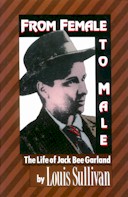
Babe Bean, a cross-dressing woman who lived on a houseboat in a lake near Stockton, was born Elvira Virginia Mugarrieta in 1869 at this address in Russian Hill. Bean’s father was the former Mexican consul to San Francisco, while her/his mother was the daughter of a former U.S. Congressman and Louisiana Supreme Court Justice.

Bean came to fame in the fall of 1897, when detained by police in Stockton for wearing men’s clothing. The Stockton newspaper published Bean’s picture in a man’s tie and hat, along with a series of sensational stories in which Bean was referred to “the mysterious girl-boy man-woman.”

After a brief stint as a newspaper reporter in Stockton, Bean enlisted in the army during the Spanish-American War and served in the Philippines. Later, Bean moved to San Francisco and served for three decades as a caretaker of poor and homeless men, until her/his death in 1936. Other names that Bean went by included Jack Bee Garland, Beebe Beam, and Jack Beam.

Although beginning in the late 1970s the lesbian community claimed Bean as a butch lesbian, according to community historian Liz Highleyman, Bean does not appear to have shown any romantic interest in women. In 1990, transman Lou Sullivan wrote a biography of Bean in which he speculated that he was a fellow transman with a sexual affinity for gay men. But the evidence remains murky. “From today’s vantage point,” wrote Highleyman, “it is impossible to know how Garland—who sometimes seemed to straddle the genders purposefully—would have identified.”

As a man, I can travel freely, feel protected and find work.”

–Babe Bean